Why 1:2 Reward-to-Risk Is a Minimum, Not a Suggestion
Require at least 1:2 reward to risk. It’s one of the first rules every student gets, and it’s also one of the first ones people quietly water down once a setup they like doesn’t quite meet it. The number isn’t arbitrary though. It’s the line where your win rate stops being the thing that determines whether you’re profitable.
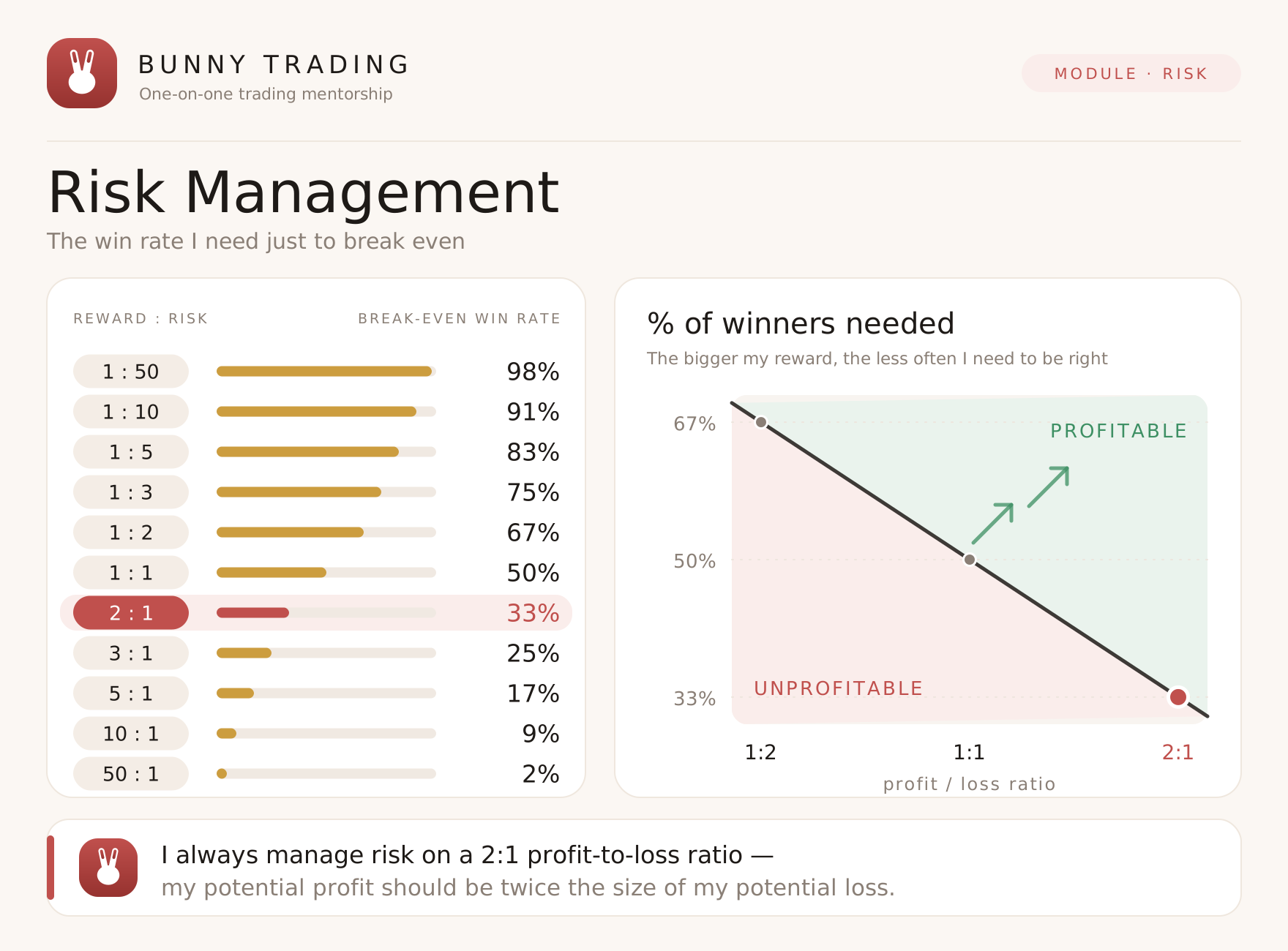
The math nobody does before they trade
At 1:1, you need to win more than half your trades just to break even before costs. At 1:2, the math flips: you only need to win 1 trade in 3 to come out ahead, because your winners are worth twice your losers. That gap between “needs to be right most of the time” and “can be wrong most of the time” is the entire reason this rule exists. It turns trading from a game you have to be good at predicting into a game you just have to execute consistently.
Why traders shrink it anyway
The setup that’s only offering 1:1.3 usually looks fine in the moment. The structure’s there, the level’s clean, it just doesn’t have room to run to a full 1:2 target before the next resistance. So the temptation is to take it anyway and call it close enough. It isn’t. A ratio requirement only protects you if you actually hold the line on it. The moment it becomes negotiable, it stops doing the one job it has.
If a setup can’t offer 1:2, that’s not a reason to lower the bar. It’s information: the structure you’re looking at isn’t clean enough yet, or the entry is too late. Wait for the version of the setup that actually has room, or don’t take it.
What this looks like in a review
When I’m checking a trade against this rule, I’m not just looking at the number you wrote down. I’m checking whether the target was realistic given the structure, or whether it was picked backwards to make the ratio look right. A 1:2 target sitting past three levels of resistance isn’t a real 1:2. It’s a number on paper that price was never likely to reach. The rule only works if the target is honest.